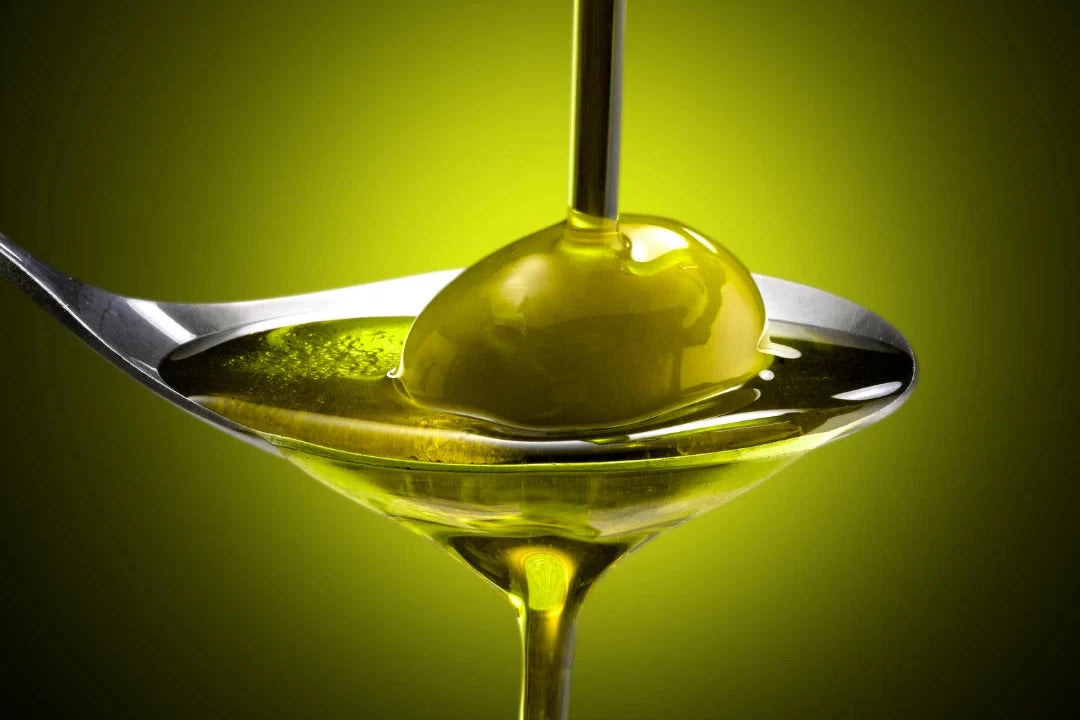

If you are looking for a healthy, flavorful olive oil today, you'll stumble across the magic word "cold-pressed" on almost every label. It suggests natural purity, centuries-old tradition, and pristine quality. But did you know that this term in the modern food industry is often more of a clever marketing tool than a reliable guarantee of quality?
Many consumers innocently grab the first oil with this label at the supermarket, pay a supposedly fair price – and are massively disappointed in terms of quality. The oil tastes flat, at worst slightly rancid, or has long since lost its much-praised health benefits due to improper processing and storage.
In this expert guide, we debunk the most persistent industry myths. We not only show you what really goes on behind the scenes of olive oil production, but also provide you with concrete knowledge: how to recognize genuine premium quality on the shelf, why the production method directly affects your health, and what you absolutely must pay attention to with your next order.
What does "cold-pressed" really mean?
According to strict EU directives, the definition is actually crystal clear: as legally enshrined in the official Olive Oil Regulation of the European Union (Regulation No. 29/2012), an olive oil may only be called "cold-pressed" or "cold-extracted" if the temperature during the entire mechanical production process never exceeds 27 degrees Celsius.
Why is this exact degree so magical? The olive is an extremely sensitive fruit. If the olive paste is heated above 27°C during production – a trick large industries often use to squeeze even more oil from the fruit – the valuable ingredients literally burn. The health-promoting polyphenols are destroyed, the fatty acids negatively change their structure, and the characteristic, fresh aroma of the olive is literally lost. With genuine cold pressing below 27°C, however, the oil remains a pure, unadulterated natural remedy.
But here begins the real problem: Many consumers mistakenly believe that "cold-pressed" is the only and highest quality criterion. This is a dangerous misconception. Even a faulty oil, made from overripe or damaged olives, can technically be "cold-pressed." So, the label alone on the bottle does not protect you from inferior goods.
The combination is always crucial: it must necessarily state "cold-pressed" AND "Extra Virgin Olive Oil" on the label. Only this highest legal quality grade guarantees that the oil was not only extracted cool, but is also sensorially absolutely flawless and has a free acidity of less than 0.8%.

This article might interest you. Natural Olive Oil: The Ultimate Guide to Real Quality
Cold-Pressed vs. Cold-Extracted: The Industry's Unspoken Secret
Here we come to the point that large bottlers in the supermarket prefer not to tell you. When we hear the word "pressed," we automatically think of romantic images of old stone mills and rustic press mats. But what looks traditional and authentic on labels is often a massive disadvantage for the quality of a modern top-class oil.
Traditional cold pressing has two serious weaknesses: First, the olive paste comes into extensive contact with oxygen on the open press mats. The fatal oxidation process begins immediately – the oil oxidizes and ages, so to speak, even before it reaches the bottle. Second, these mats can hardly be 100% hygienically cleaned, which leads to barely perceptible but quality-reducing off-flavors or fermentation aromas in many oils.
The solution and the real secret of genuine premium oils is cold extraction (often labeled "cold-extracted" or directly "cold-extracted").
In this ultra-modern process, the oil is no longer mechanically squeezed through mats, but gently separated from pulp and water in a closed high-tech centrifuge. The decisive advantage: The entire process takes place under complete exclusion of air (without oxygen) and precisely below 27°C. This is the only way to maximally "lock in" the volatile, fruity aromas and health-promoting antioxidants in the oil.
"From our practice and market observations, we can make a clear statement: anyone looking for uncompromising quality today should opt for cold-extracted oils. Traditional pressing is technically outdated. At Eleaminon, we are deeply convinced and exclusively rely on this modern centrifuge process. This is the only way we can guarantee that our olive oil arrives in your kitchen as fresh and unoxidized as it was on the day of harvest."
Can you use cold-pressed olive oil for frying?
One of the most frequently asked questions we hear from our customers is: "Isn't cold-pressed olive oil far too good to be used for frying, and doesn't it even become unhealthy when heated?"
The short and clear answer: An absolute yes, you can fry with it! The myth that Extra Virgin Olive Oils are only suitable for cold salads persists stubbornly. This has long since been scientifically refuted.
The secret lies in the chemical composition: A genuine, high-quality Extra Virgin Olive Oil consists largely of monounsaturated fatty acids (oleic acid) and is packed with cell-protecting antioxidants. This natural composition makes the oil extremely heat-stable. A qualitatively flawless cold-pressed (or cold-extracted) olive oil has a so-called smoke point between 190 °C and 210 °C.
Since you typically fry vegetables, fish, or meat in a normal frying pan at an average of 160 °C to 180 °C, you are absolutely on the safe side. It does not burn and does not release any toxic substances. On the contrary: it is even significantly healthier for frying than industrially highly refined seed oils such as conventional sunflower or rapeseed oil.
When you should not use it: The only exception is extreme deep frying at continuous temperatures well above 200 °C. For this, a premium olive oil would not only be too valuable and expensive, but it could also exceed its smoke point.
The 3 Biggest Lies on the Supermarket Shelf
In practice, we repeatedly see how consumers are misled by clever label marketing. The supermarket shelf is full of tempting bottles with Italian or Greek sounding names that suggest premium quality but deliver industrial average.
If you really want to buy healthy and high-quality olive oil, you must not fall for these three industry-known tricks:
1. The Origin Lie: "Blend of olive oils..."
Flip the bottle over. Does it say in small print on the back "Blend of olive oils from the European Union" or even "from the EU and non-EU"? Put the bottle back immediately. This is the ultimate proof that anonymous, often inferior oils from various countries have been industrially mixed here to artificially lower the price. A genuine quality oil always has a precise, traceable origin (e.g., a specific region or directly from a named producer).
2. The Color Deception: "The greener, the better"
Many people believe that a deep green olive oil is automatically fresher or healthier than a golden yellow one. This is simply wrong. The color of the oil depends exclusively on the olive variety and the harvest time, but says absolutely nothing about the quality. Some bottlers even use green bottles or add minimal chlorophyll to deceive the eye. For precisely this reason, professional olive oil tasters (sommeliers) always test oils in blue glasses – to avoid being swayed by the color and to rely solely on smell and taste.
3. The Price Trap: "Premium Oil for 6 Euros"
Let's face it: a genuine, early-harvested, and gently cold-extracted "Extra Virgin Olive Oil" cannot be sold for 5 or 6 euros per liter. This is economically impossible. The elaborate care of the trees throughout the year, the costly early harvest (when the olives are still green but extremely low-yielding), and modern centrifuge technology cost real money. If an oil is extremely cheap, the manufacturer has cut corners on quality – often at the expense of your health. Don't look for the cheapest price, but for true value.
How to recognize real, high-quality olive oil? (The Expert Checklist)
Now that you know the tricks the industry uses, the most important question arises: How do you separate the wheat from the chaff? When you are in front of the shelf or ordering online from our shop, we recommend you go through this checklist in your head. Don't look for the lowest price, but for true value.
· [ ] The only acceptable quality grade: Only buy oil with the exact designation "Extra Virgin Olive Oil" (or Italian: Extra Vergine). Any other designation (such as just "Virgin Olive Oil" or "Olive Oil") means a massive loss of quality or even chemical refining.
· [ ] The production method: Look for the terms "cold-extracted" or "cold-obtained". As we have already clarified, this modern centrifuge method is far superior to traditional "cold pressing" in terms of hygiene and oxidation protection.
· [ ] Transparent origin: A good oil has nothing to hide. It should always mention a specific region of origin or the producer's estate (e.g., a specific region in Greece).
· [ ] The right packaging: Never buy olive oil in clear white glass or even plastic bottles. Light is olive oil's greatest enemy and makes it go rancid extremely quickly. Premium oils are always bottled in dark glass (green or brown glass) or in opaque tin canisters.
· [ ] The ultimate taste test (The throat scratch): This is where most consumers are mistaken! If you taste the oil neat and it lightly scratches your throat on the finish or even makes you cough, many think: "The oil is bad." The absolute opposite is true! This pungency and slight bitterness (triggered by the substance oleocanthal) are the absolute proof of quality. It shows that the oil is extremely fresh and still bursting with health-promoting polyphenols. A mild, almost watery oil has already lost these valuable substances.
"Our advice (we recommend): If an olive oil only tastes like fat and has no character or slight pungency, it is often worthless from a health perspective. A real quality oil must live on the palate!"
Why Eleaminon? Our Philosophy of Cold Extraction
At Eleaminon, we firmly believe that olive oil is much more than just a simple cooking fat. It is a piece of millennia-old culture, pure nature, and – if done correctly – one of the best investments in your daily health. That's why we leave absolutely nothing to chance in our production.
Our philosophy begins long before the mill. Our olives are picked with particular care at precisely the right moment – often during the early harvest phase – and processed within a few hours. Why this rush? Because every hour an olive spends separated from the tree, lying in the sun or sweating in plastic bags, increases its acidity and drastically reduces its quality.
We rely 100% on state-of-the-art cold extraction (centrifuge technology) under strictly controlled conditions and complete exclusion of air. This prevents any oxidation. The result is an Extra Virgin Olive Oil that not only meets strict EU standards but far exceeds them in taste and high polyphenol content.
"Our clear stance: Don't compromise on olive oil. When it comes to what you put on your family's plate every day, the cheapest price shouldn't be the only criterion. Opt for transparency, genuine extraction, and noticeable freshness."
Frequently Asked Questions (FAQ)
To remove any remaining uncertainties before purchase, we have answered our customers' most frequent questions here briefly and precisely.
Is cold-pressed olive oil healthy?
Yes, extremely. Since it has not been exposed to industrial heat, it contains large amounts of monounsaturated fatty acids (oleic acid), vitamin E, and valuable cell-protecting antioxidants (polyphenols). This combination makes it the centerpiece of the world-famous, healthy Mediterranean diet.
How long does cold-pressed olive oil last?
Unopened and stored correctly, high-quality olive oil can last up to 18 to 24 months. The most important rule: Always store it in a dark place (in a cupboard) and cool (at an optimal 15 °C to 18 °C). However, the refrigerator is taboo, as the oil will flocculate there. After opening the bottle, you should ideally consume it within 2 to 3 months to enjoy its full, fresh aroma.
Cloudy or clear olive oil – which is better?
Cloudy olive oil is unfiltered (often referred to as Naturtrüb or "naturally cloudy"). It still contains tiny particles of olive pulp and water. This often gives it a more intense and rustic flavor at first, but it is also more delicate and should be consumed more quickly. Clear oil has been filtered after extraction, making it significantly more shelf-stable and heat-resistant (better for frying). Both varieties are excellent – it simply depends on your intended use.